



This page provides an overview of the tours and lectures arranged by the Berlin Historical Association in 2023.
7 November 2023 - Showing of Billy Wilder's 1961 film "One, Two, Three".
28 October 2023 - Guided tour of the Topography of Terror.
16 September 2023 - Guided tour of the Secession Exhibition at the Alte Nationalgalerie.
7 September 2023 - Talk by Dr Grace Huxford about her book "The Korean War in Britain".
5 September 2023 - Annual General Meeting.
26 August 2023 - Guided tour of Rixdorf.
Sat 5 August 2023 - Guided tour of the Heavy Load-Bearing Body Information Centre.
The “Heavy Load-Bearing Body” bears witness to the most megalomaniacal construction project Berlin has ever seen. In 1941 a technical structure was erected in the immediate vicinity of the planned triumphal arch to test the load-bearing capability of the construction site for the monumental building on the North-South Axis that was to be at the centre of Germania. The so-called Heavy Load-Bearing Body, a cylindrical weighting construction made of solid concrete, has a diameter of 21 metres. It protrudes 14 metres high above ground and extends 18 metres below ground. French forced labourers were used in its construction. The Heavy Load-Bearing Body was not intended to be demolished later, but to be buried under the new road. The North-South Axis was never completed in its planned form. All that remains – like a warning from the past – is the twelve thousand tonnes Heavy Load-Bearing Body.
Sun 30 July 2023 - Guided tour of Touro College.
Mon 10 July 2023 - Guided tour of Schloss Tegel.
Schloss Tegel was acquired by the Humboldt family in 1765 and is where the brothers Wilhelm and Alexander von Humboldt grew up. Under the guidance of Wilhelm von Humboldt, who took over the property in 1797 after the death of his mother, the manor house, also known as the "Humboldtschloss", was redesigned in the classicist style between 1820 and 1824 according to plans by Karl Friedrich Schinkel. Schinkel integrated the existing Renaissance building into a four-wing building complex with corner towers and matched the interior design. The building includes, among other things, the Blue Salon, the Antique Hall and the Blue Tower Cabinet. In 1820 the palace park was extensively redesigned by Peter Joseph Lenné, and most of it has been preserved to this day. The east-west avenue of linden trees laid out in 1792, on which there is also the 400-year-old Wilhelm von Humboldt oak tree, leads to the Humboldt family grave site laid out in 1829 according to plans by Karl Friedrich Schinkel. This is overlooked by a thirty-foot-tall granite column, from whose Ionic capital a marble statue of Hope looks down upon the graves.
Thu 29 June 2023 - Book presentation by Dr Helmut Trotnow OBE, first Director of the Allied Museum.
Dr Helmut Trotnow OBE, the first and founding Director of the Allied Museum, presented his book “Erinnerungen” exclusively to members of the Berlin Historical Association. The Allied Museum documents the influence and work of the Western Allies in Germany from the end of World War II until the 1990s. There is probably no one who could describe the history of the Allied Museum more knowledgeably than he. In his book, Dr Trotnow outlines the rocky road from the initial idea to the establishment and opening of the Museum. His history of the Museum is more than simply a cultural-historical document. It opens up a fascinating panorama of contemporary history. Famous and not so famous individuals become tangible as human beings, whilst world historical events receive a new perspective.
17 June 2023 - Guided tour of the former Teufelsberg listening station.
13 May 2023 - Guided tour of the Plaster Cast collection of the Free University.
The Collection of Ancient Plaster-casts (Abguss-Sammlung) at the Free University Berlin includes around 2,100 casts of Greek and Roman sculptures. It is used for university teaching and research and, as a museum, is also intended to make ancient sculptures accessible to a broad public. The collection continues the tradition of the famous cast collection, founded as early as 1696, which was on display in the 19th century in the 'Neues Museum' on Berlin's Museum Island and most recently from 1921 to 1944 in the Friedrich Wilhelm University with around 2500 casts. This old collection was largely destroyed in 1950/51. Today's exhibition provides a comprehensive overview of the history and manifestations of Greek and Roman sculpture. The chronological time-span extends from the Cycladic culture of the 3rd millennium BC to geometric and archaic sculpture, from classical and Hellenistic sculpture, to sculpture from the Roman and Byzantine Empires up to around 500 AD. Selected pieces from other ancient cultures in the Mediterranean region complete the collection.
1 May 2023 - Talk by Major General Peter Williams CMG OBE.
Major General Peter Williams qualified as a Russian interpreter in 1981 and spent four years during the 1980s in BRIXMIS, the British Commanders'-in-Chief Mission to the Soviet Forces in East Germany. He subsequently served in the former Yugoslavia and, finally, as the first Head of the NATO Military Liaison Mission to the Russian Federation. The subject of his talk was "The West and Russia - A dream that died".
22 April 2023 - Guided tour of the German Resistance Memorial Centre.
What if Count Stauffenberg had succeeded? The 20 July 1944 is a pivotal moment in German history, although the day changed almost nothing and was forgotten for decades. Not until the seventies were memories evoked and the conspirators deemed to be heroes. In 1980 the German Resistance Memorial Centre was opened at the place where Colonel Count Stauffenberg and other conspirators were shot after the failed assassination attempt. The memorial is in the grounds of the Federal Ministry of Defence, but it is explicitly not only for the military resistance. Historians agree that there was no united, national resistance movement in Nazi Germany at any time during Hitler's years in power. But there were several individual groups. We will have the chance to learn more about two of them: The Rote Kapelle (Red Orchestra) referred to a loose network of resistance groups, connected through personal contacts, uniting hundreds of opponents of the Nazi regime. They distributed prohibited leaflets, aided Jews, documented the atrocities of the Nazis, and transmitted military intelligence to the Allies. The Kreisauer Kreis was a group of about twenty-five dissidents led by Helmuth James von Moltke, the great-grandnephew of Helmuth von Moltke. It was an intellectual circle that discussed how they would reorganise the German government after the end of the Third Reich. Most of the members died at the hands of the Gestapo.
17 April 2023 - Talk by Brigadegeneral Frank Gräfe.
Brigadier General Gräfe spoke to BHA about the Luftwaffe of the 21st century, its current operations as a NATO partner and the challenges that it faces.
25 March 2023 - Guided tour of the Samurai Museum.
The Samurai Museum of Berlin is Europe’s first museum of Samurai art. We will be guided through the museum and be exposed to the life and heritage of Japan's legendary warrior elite. The Samurai (or bushi) were the warriors of pre-modern Japan. They later made up the ruling military class which eventually became the highest ranking social caste of the Edo Period (1603-1867). The Samurai employed a range of weapons such as bows and arrows, spears and guns, but their main weapon and symbol was the sword. More than 1,000 objects reveal the extraordinary artistry of traditional Japanese craftsmanship. Also on view is a multimedia installation that brings the distant era to life. One can zoom in to gigapixel images to uncover minute details, follow the labour-intensive processes of Japanese sword making, and watch virtual Noh and Taiko performances. The tour is designed to provide an overview of the museum's vast collection of Samurai art; certainly one of the largest collections in Europe. The interactive displays and virtual performances give the viewer the chance to engage more in depth with Samurai culture and its meaning for Japanese culture up to the time of its downfall in the 1860s after Japan was forced to open up to Western trade.
17 March 2023 - Talk by Sir Barney White-Spunner on his book, "Berlin: The Story of a City".
Lieutenant General Sir Barney White-Spunner KCB, CBE spoke to BHA about his recent book that tells the story of this extraordinary city from its medieval origins to the present day, describing it as a city on the edge – geographically, culturally, politically and morally. A city that has given rise to movements that changed Europe – the Reformation, Marxism and Fascism. This is a story of tension and contradiction, of ground-breaking cultural experiment and artistic and social liberation. It is the compelling story of a unique, absorbing and multi-faceted city.
26 February 2023 - Guided tour of the New Synagogue Berlin - Centrum Judaicum.
The New Synagogue Berlin in Oranienburger Street was opened in 1866 and used to be one of the best-known places of Jewish worship in Germany. It was not only a newly-erected and magnificent building, but also a place for new rituals: An organ, a mixed choir, a prayer book in German, and the first female Rabbi in the world (who was ordained in 1935). Today, one of the remaining rooms is used as a synagogue, and once again its congregation is introducing innovations. We will view the contemporary synagogue as well as the permanent exhibition and explore themes of tradition and modernity. And we will be invited to discuss themes such as hope, uncertainty, destruction and Jewish self-determination.
21 January 2023 - Johann Gottfried Schadow exhibition.
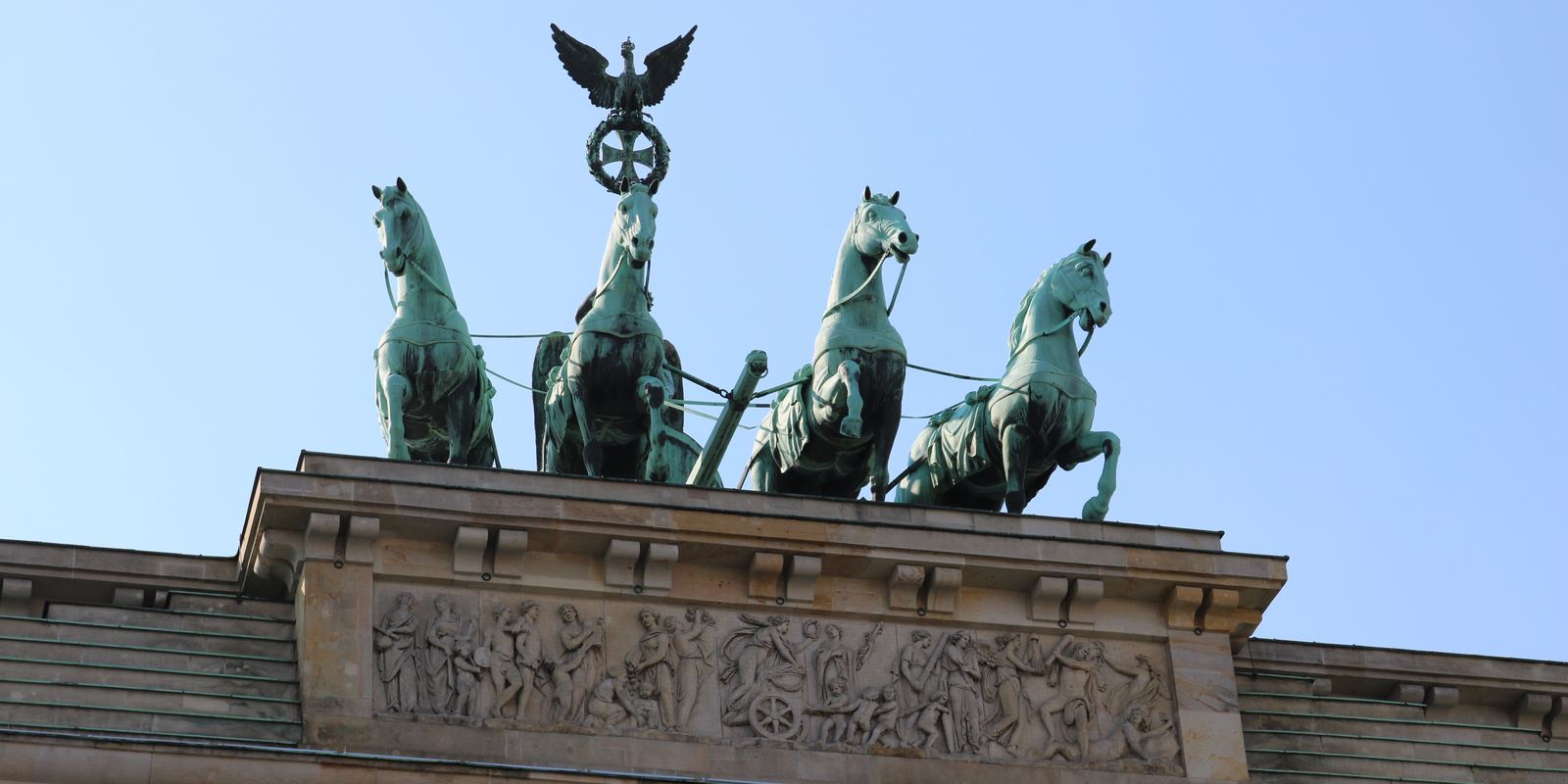
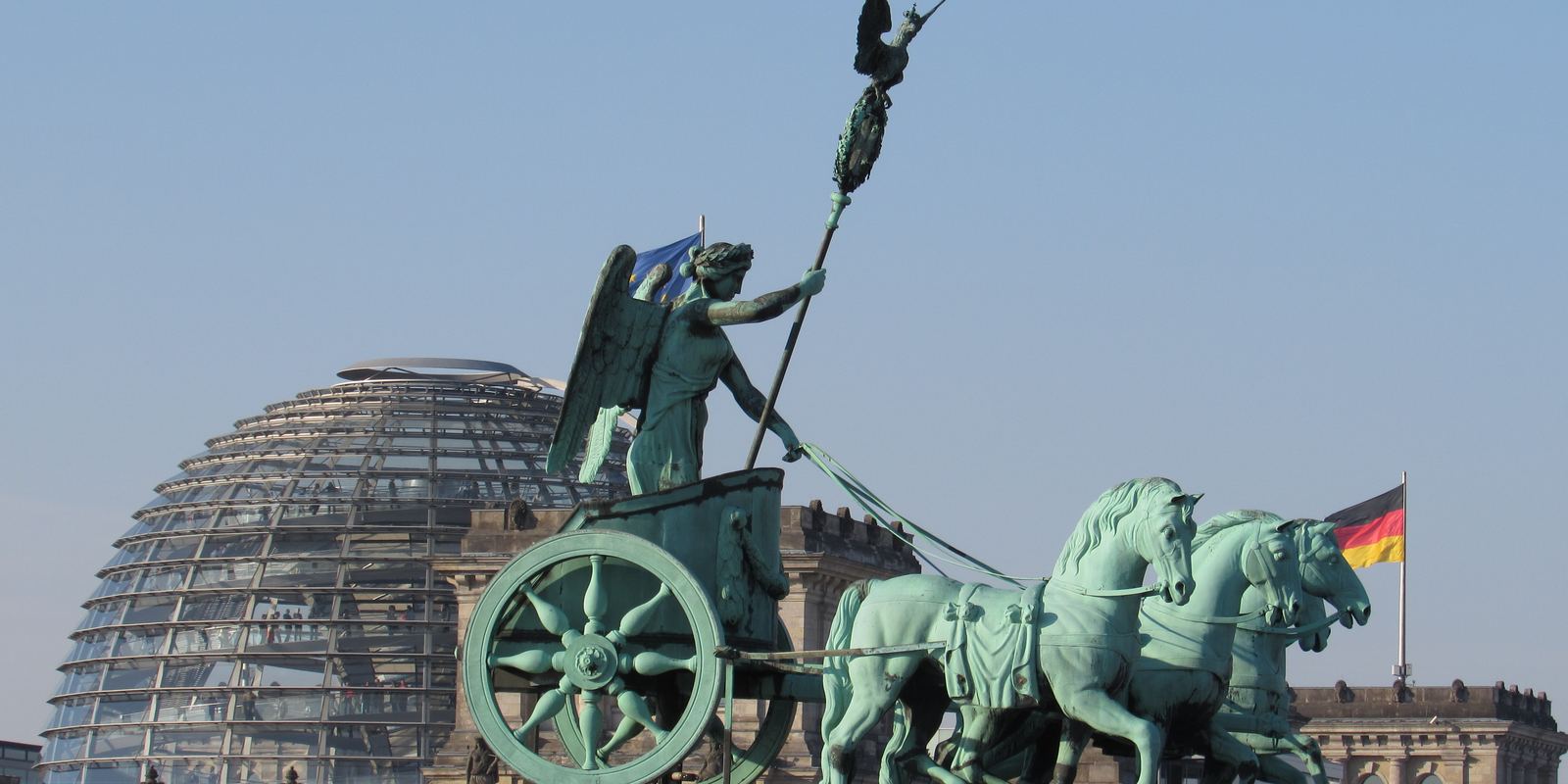
The life-size double statue of Princesses Louise and Frederica of Prussia, known as the “Princess Group”, is Johann Gottfried Schadow’s (1764–1850) magnum opus. Seen as the founder of the Berlin School of sculpture, Schadow came to epitomise German Neoclassicism, with this work being emblematic of the movement. As the first sculpture depicting two female historical figures, this work wrote art history, and continues to be a highlight for visitors to Berlin from around the world. Two years earlier, at the age of 29, Schadow had completed his first masterpiece, the goddess Victoria in her chariot with the four horses, which for the last 230 years has been a symbol of Berlin, if not of Germany. The first retrospective in some 30 years, this exhibition presents Schadow’s major sculptural, graphic and art-theoretical works, arranged into 11 thematic sections. Following extensive conservation and restoration work, the original plaster model (from 1795) is exhibited alongside the original marble rendering (1797) for the first time ever.