This page provides an overview of the tours and lectures arranged by the Berlin Historical Association in 2024.
13 December 2024 - BHA's annual Christmas Dinner.
30 November 2024 - Guided tour of the Marienkirche.
The Marienkirche or St. Mary’s Church is Berlin’s oldest church – although we are not even sure how old it is. But the site is at least eight centuries old, although the architecture of the building today is largely the result of comparatively modern restoration work carried out in the late 19th century and in the post-war period. The GDR even renamed the street with church to Karl-Liebknecht-Straße after a communist. But it still stands and has survived countless wars and the GDR, even though everything around it has been rebuilt, including the Alexanderplatz and the TV-Tower, and the traces of history that were to be erased. As a matter of fact, the Marienkirche is the last surviving building of Berlin’s old medieval core. The Dance of Death fresco in the church's tower hall is one of the most important surviving medieval works of art in Berlin. Over 20 metres long and two metres high, the mural depicts a round dance of clerical and secular representatives of the estates, each engaged in a dance of death with a mortal figure. There is no written record of how the fresco was created. Various inferences allow a date of around 1484, the year of the plague; and the accompanying text verses represent the oldest poetry in Berlin. The Dance of Death was probably whitewashed over with lime during the Reformation and only rediscovered centuries later, in 1861 by the court architect Friedrich August Stüler.
14 November 2024 - Annual General Meeting
with guest speaker Dr Günter Büchner who gave a moving account of how he fled the DDR in 1958, and how he managed to start a new life in West Berlin and complete his studies before embarking on a career at the Free University.
19 October 2024 - Guided tour of the Martin-Niemöller-Haus.
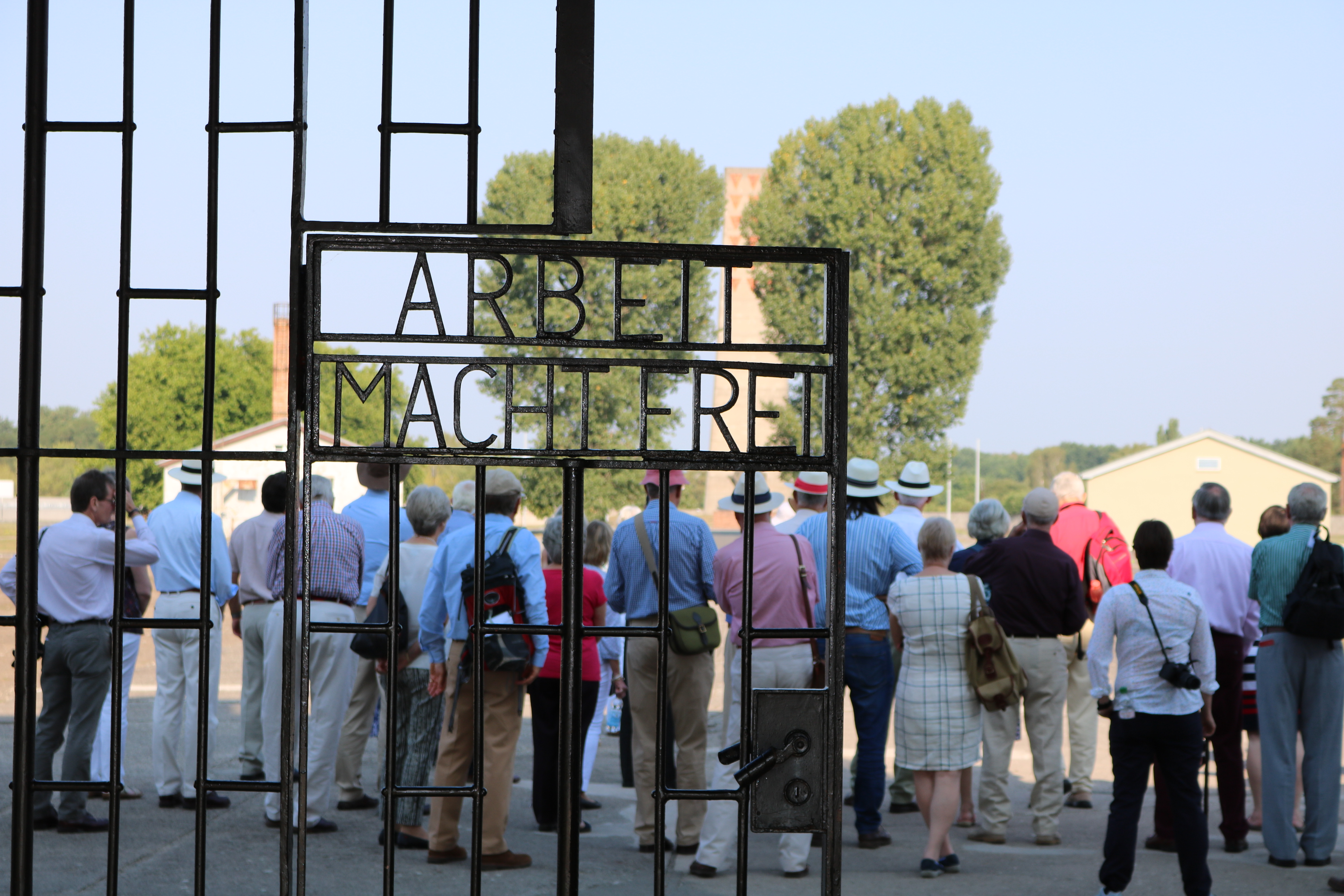
As the former parsonage of the Evangelical Church of Dahlem at Cecilienallee 61 (today Pacelliallee), today's Martin Niemöller House was the official residence of Pastor Martin Niemöller, who worked here during the Nazi era. He was a co-founder of the Pastors' Emergency League and a leading figure in the Confessing Church. Having been spied on and harassed by the Gestapo for a long time, he was arrested in the parsonage on 1 July 1937 and initially held in custody, and later in the Sachsenhausen and Dachau concentration camps as Adolf Hitler's "personal prisoner" until the end of the war. Even during his time in prison, the parsonage, along with St. Anne's Church and the parish hall, was a place of conspiratorial activity against Nazi rule, a meeting place for courageous Christians who tried to resist in his spirit. Martin Niemöller survived his imprisonment and, after his liberation by American troops in 1945, became a symbol of the "good German" throughout the world. As later church president of the Evangelical Church in Hesse and Nassau, he continued to campaign for peace in the world and opposed rearmament. The former national conservative submarine commander of World War I became a convinced pacifist. His biography includes his many turns and false starts, but also his courageous Christian confession and active commitment.
21 September 2024 - Lecture about Peenemunde and the V-Weapons.
The Cold War was defined by two technologies: nuclear weapons, and rockets to deliver them. The development of the latter was led by German engineers working first in the suburbs of Berlin (Reinickendorf), then in the forests 40 km to the south (Kummersdorf), then on the island of Usedom on the Baltic (Peenemünde), and finally in the Harz (Nordhausen). On 3rd October 1942 this group succeeded in launching the world’s first ballistic missile, the A4 or ‘V2'. Just 25 years and one month later, members of this same group launched the world’s largest rocket on its fully successful first flight - the Saturn V, which only 20 months later took Apollo 11 to the Moon. This illustrated talk explores the politics and geography that took this group across Germany between 1930 and 1945; what traces remain of their presence in these places (and what visiting them today is like); and the ethical issues raised by their work. Our lecturer, Dr Andrew Thomson, is an historian with over 20 years’ experience as a guide and tour organiser; and as a friend of a BHA member has very kindly agreed to speak to us during his brief visit to Berlin.
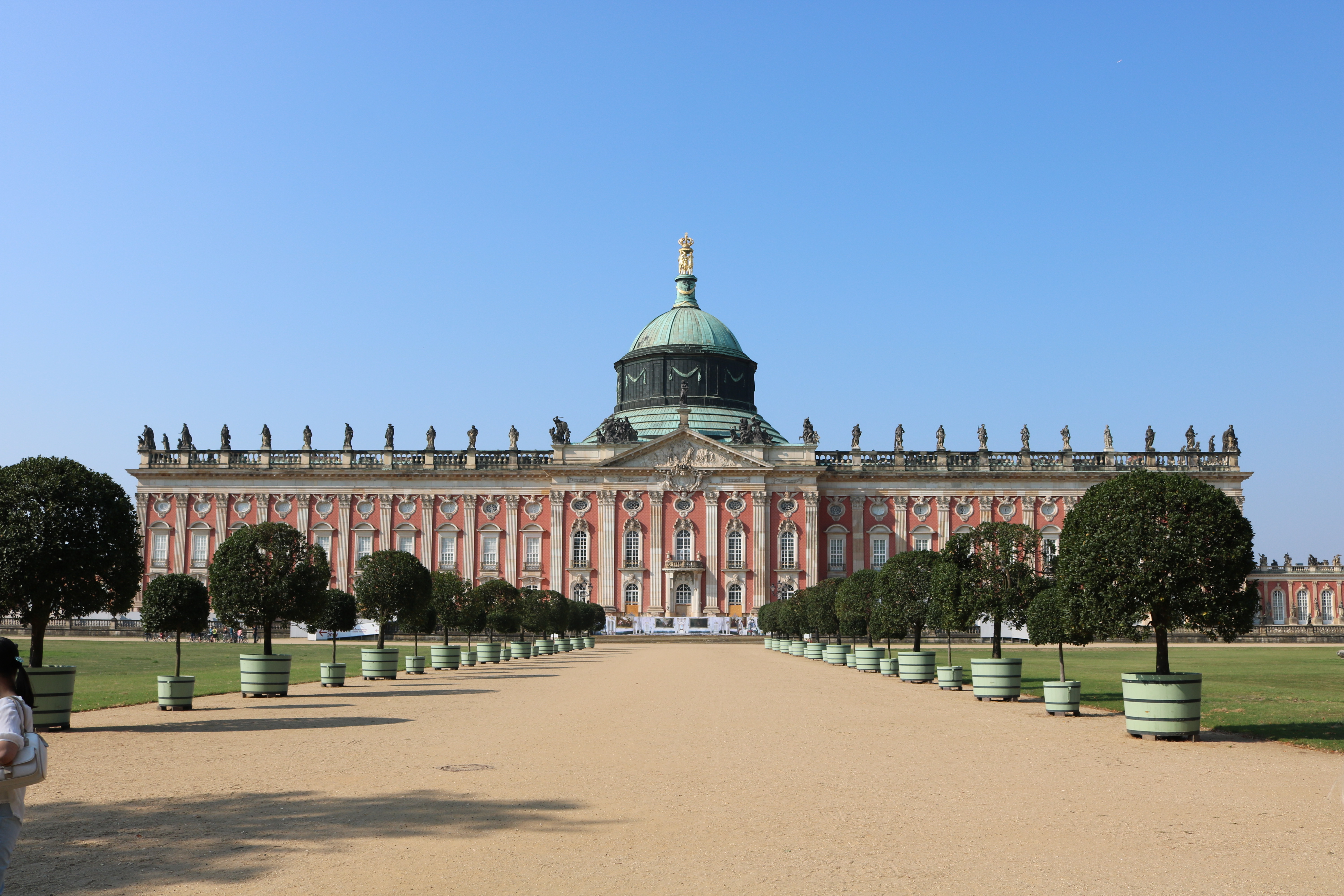
7 September 2024 - Guided tour of the New Wing, Schloss Charlottenburg.
The heyday of Berlin sculpture is brought to life in a presentation of Neoclassical and Romantic sculptures displayed in the vestibule of the New Wing. Frederick the Great had Sanssouci Palace built in Potsdam and also expanded Charlottenburg’s Old Palace with the addition of the New Wing. The highlights of this self-contained palace structure, which was nearly destroyed in World War II and subsequently largely reconstructed, are its grand festival halls. The White Hall and the opulent Golden Gallery are among the most beautiful Rococo creations in Europe. In addition to the grand halls, two separately situated apartments were created for the artistic king. One of the largest collections of 18th century French painting outside France can be seen in these interiors, including masterpieces by Antoine Watteau. Frederick the Great’s nephew and successor, Frederick William II, also had a summer apartment in the New Wing designed in the Chinese and Etruscan styles, as well as winter chambers in an early Neoclassical style. His son and daughter-in-law, Frederick William III and the celebrated Luise, also used the New Wing as a preferred summer residence. The queen resided in the winter chambers of her father-in-law, located on the upper floor to the west. Karl Friedrich Schinkel created her elegant bedchamber, a fine example of Prussian furniture design, in 1810. A superlative royal art collection from the early 19th century that includes major works of French painting is presented in the former apartment of Frederick William III on the ground floor.
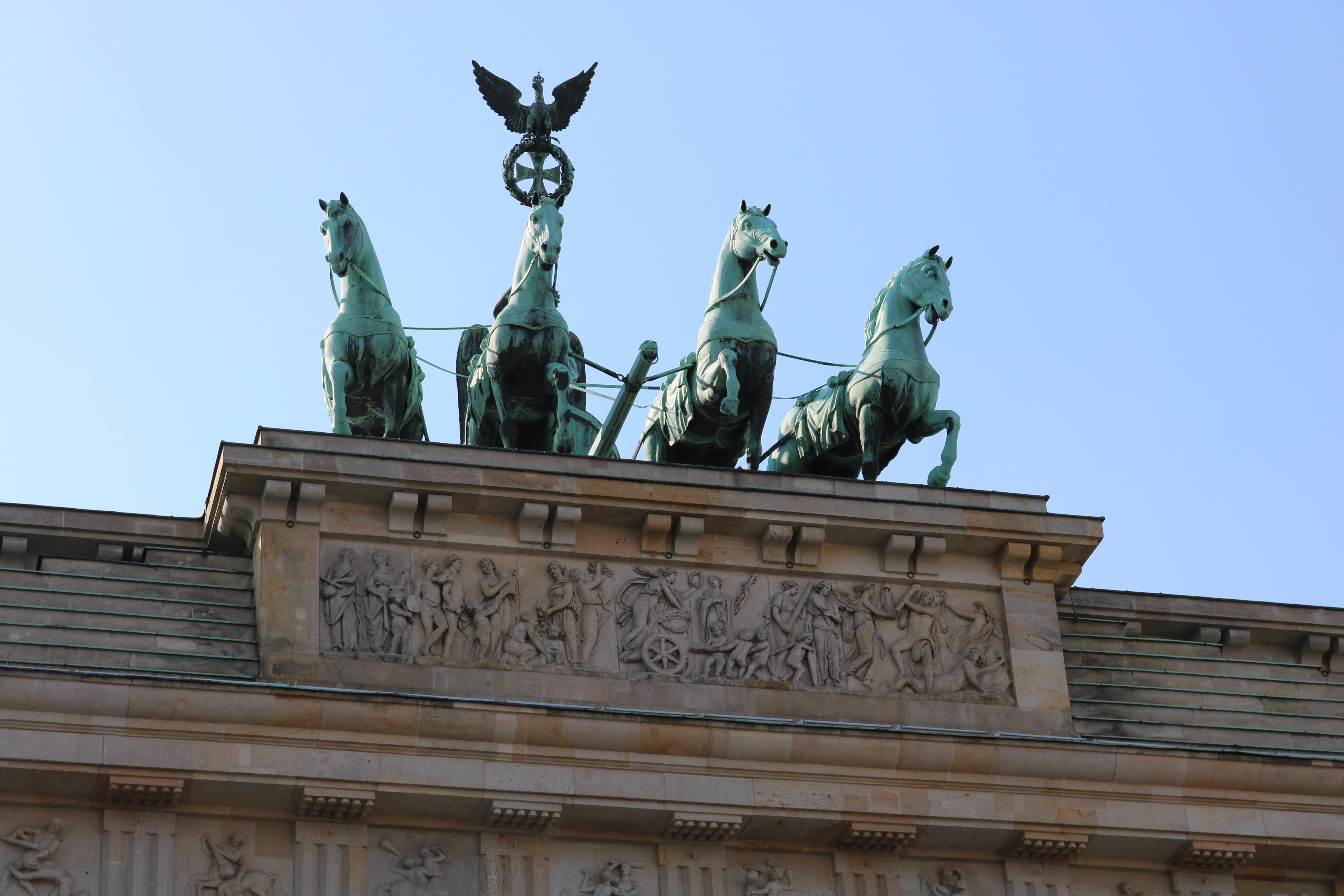
10 August 2024 - Guided tour of the Brandenburg Gate.
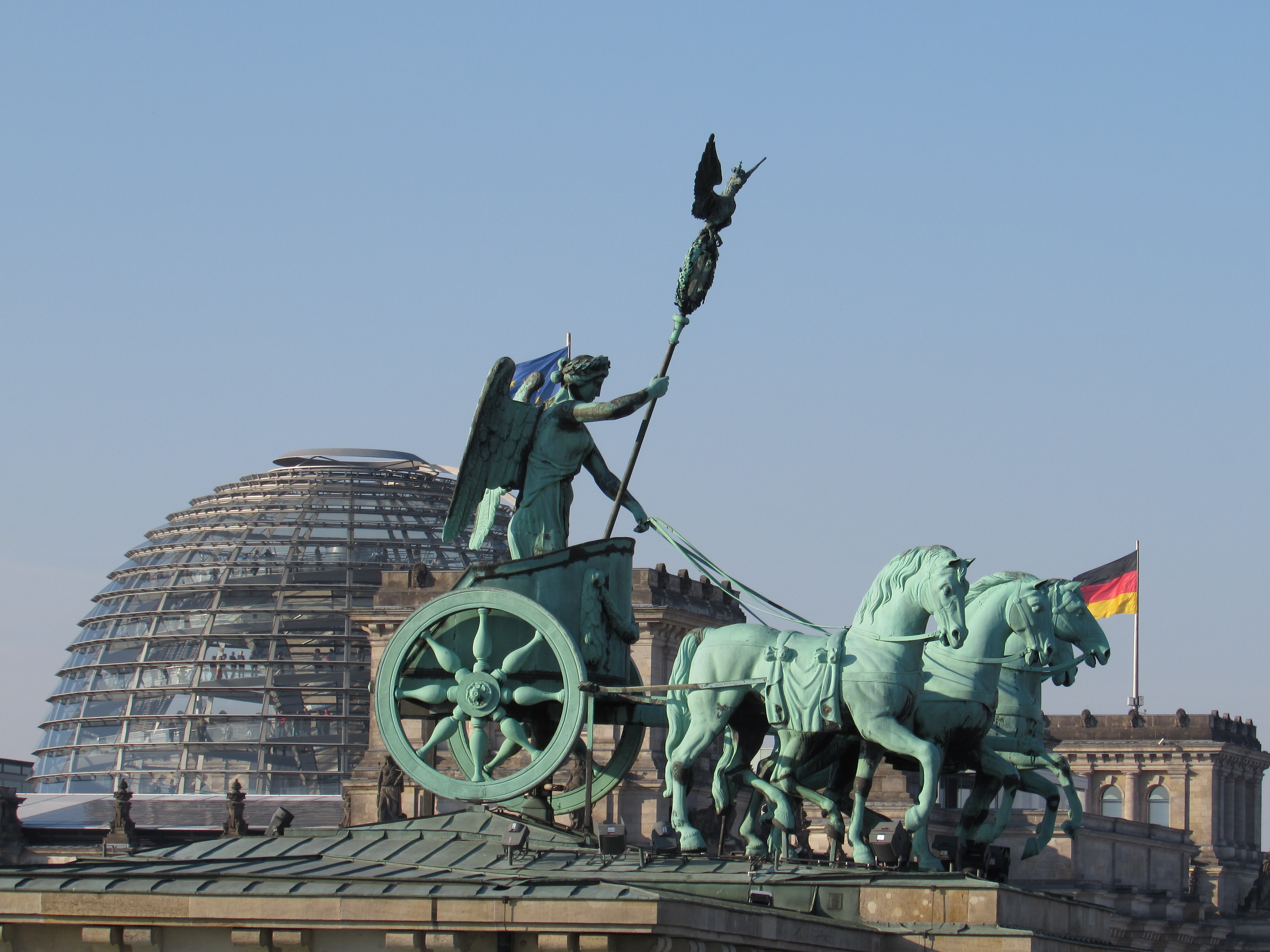
The Brandenburg Gate in Berlin is the most famous work of the master builder, architect and director of the Berlin Supreme Court Building Office, Carl Gotthard Langhans (1732 to 1808). It was built between 1789 and 1791 on behalf of the Prussian King Frederick William II as the western city gate and opened to traffic in 1791. The quadriga was put on top in 1793. The Brandenburg Gate has been a key witness to major events since its completion and was charged with "national energy" as a symbol for 200 years. To achieve the greatest possible external impact the architect, Carl Gotthard Langhans, used elements from antiquity and the Renaissance, which he masterfully combined and re-interpreted. Our guide, Dr Zitha Elevi, (who was also our guide for the “Secrets of the Quadriga”) will show the models, explain the message of form and decoration and present the gate as a (political) work of art and at the same time as an important engineering structure of its time.
13 July 2024 - Visit to the Leistikowstrasse Potsdam Memorial and Meeting Place.
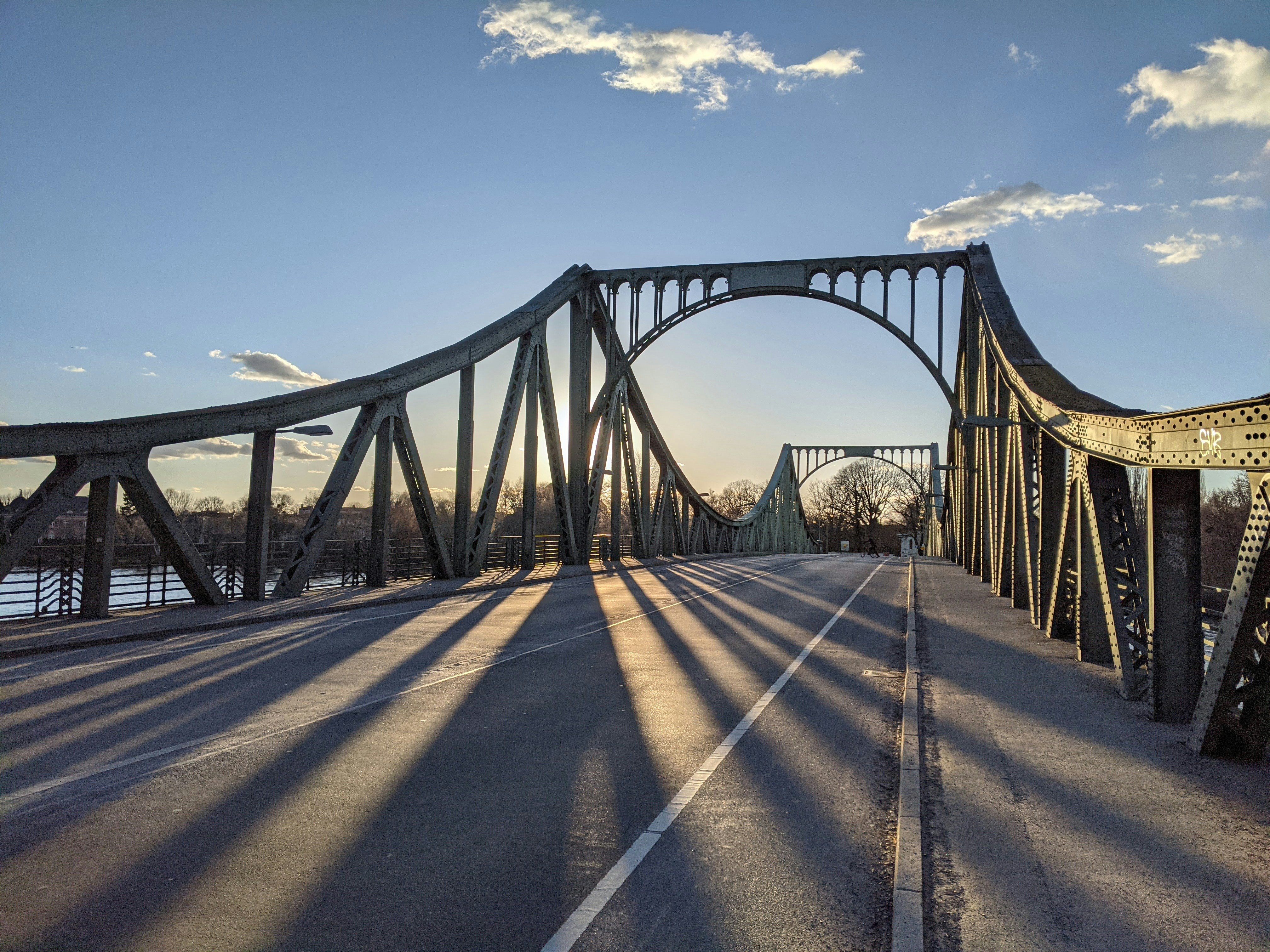
From 1945–1991 the former home of the Evangelical Church Relief Association was converted for use as the central remand and transit prison for Soviet military counterintelligence. The people imprisoned there were mostly citizens of the Soviet Union, with numerous Germans and a few people of other nationalities. Apart from the headquarters of the Soviet secret service (KGB) in the Karlshorst district of Berlin, the secret service base was the German headquarters of Soviet military counterintelligence, called "Military Town No. 7", and was the most important intelligence outpost at the interface with Western Europe. Thousands of people were held here over the years. Most of them were accused of espionage against the Soviet military. Interrogations by investigating officers led to forced confessions from detainees who were then given long prison terms or even death sentences. Our tour of the permanent exhibition will focus on biographies of former German and Soviet prisoners, letting us see their life through the barren cellar cells and numerous inscriptions they left, as well as offer us a chance to learn more about arrest, interrogation, and everyday prison life through eyewitness accounts.
7 June 2024 - Visit to the Documentation Centre for Displacement, Expulsion, Reconciliation.
The Documentation Centre for Displacement, Expulsion, Reconciliation was newly opened in 2020. The Documentation Centre provides information about the causes, dimensions and consequences of displacement, expulsion and forced migration in twentieth-century Europe and beyond. The main focus is on the displacement and expulsion of Germans at the end of the Second World War, which was initiated by Germany. The exhibition illuminates politically, ethnically and religiously motivated forced migrations, primarily in twentieth-century Europe, but also beyond. The displacement and expulsion of Germans during and after the Second World War constitute the focus of the exhibition’s narrative. The exhibition focuses on questions of universal significance: Why are people expelled or forced to migrate? What are the paths they have to travel? What does it mean to lose one’s homeland? How can those affected make a new start?
25 May 2024 - Visit to Schloss Königs Wusterhausen.
Since he was a boy, King Frederick William I, Prussia’s “Soldier King,” had loved Wusterhausen. It was here that he planned and prepared for his reign, developed new ideas for a well-organised and economical administration, and started to assemble a sizeable army, whose soldiers became known as the “Lange Kerls” (tall men). Later, Frederick William I and his family spent happy days here from August to November and made Königs Wusterhausen Palace his autumn residence. He carried out his duties as sovereign and at the same time indulged in his great passion for hunting from here. In addition to hunting, he called his famous tobacco council every evening, where politics was discussed in a friendly, convivial atmosphere, peppered with bawdy jokes! The building mainly dates back to the 16th century and visitors get an authentic insight into the living environment and artistic work in Brandenburg-Prussia in the first half of the 18th century. The castle also features 40 pictures of the king painted by his own hand, which have their own charm. Along with Charlottenburg, the palace garden is one of the earliest French Baroque gardens in the style of André Le Nôtre in the Berlin-Brandenburg region. The baroque basic structure of the garden has now been restored and forms a unity with the remains of the design from the 19th and 20th centuries.
20 April 2024 - Visit to the DDR Museum.
The GDR has been gone almost as long as it existed. This year we mark the 35th anniversary of the fall of the Berlin Wall. A few months after this historical event the writer Stefan Heym said, the GDR will be soon nothing more than a footnote in the history books. Indeed? One and a half generations later Germany is still divided – the legacy of the DDR lives sometimes even within people who weren’t born when the five Länder in the East became part of the Federal Republic of Germany. How was life back then? The Wall, Stasi, Trabant – or more? Or was life in East-Germany maybe not so different after all? We would like to get to the bottom of these questions with a guided tour in the DDR-Museum. The highlights of the exhibition include a simulated drive in an original Trabant P601 car, a fully furnished reconstruction of a high-rise tower block flat with hundreds of original objects to discover, countless interactive games suitable for young and old alike, the monumental fresco »In Praise of Communism« and the opportunity to interact with a range of artefacts.
16 March 2024 - Guided tour of the exhibition "Roads not Taken".
Alternative history research is not particularly popular at German universities. Questions such as "What would have happened if...?" are considered unscientific. But especially when you are at a crossroads, it sometimes helps to look at other paths that you have not taken. This is what the German Historical Museum is doing with the "Roads Not Taken" exhibition. The probabilities of history not being made are shown on the basis of 14 striking incisions in German history - prevented by coincidence or the weight of personal shortcomings. It is about the German wars of unification and the First World War, Stauffenberg's Hitler assassination and the Remagen Bridge, the Stalin Note and the Berlin Airlift and the fall of the Berlin Wall. We have the chance to take an English-language guided tour of this exhibition and to take a look at the other end of the crossroads.
24 February 2024 - Guided tour of the "Secrets of the Quadriga" exhibition.
The Brandenburg Gate with its Quadriga is Berlin's most famous landmark and known worldwide as a symbol of German division and reunification. However, the quadriga standing on the gate is not the original from 1793, created by Johann Gottfried Schadow, the founder of the Berlin school of sculpture. The original was badly damaged in the Second World War and destroyed in 1950. A replica of the Quadriga has stood on the Brandenburg Gate since 1958. This replica was created using protective moulds from 1942, of which only Victoria's face remains. Two monumental plaster models of the quadriga from the Brandenburg Gate were made in 1957/58. These models of Victoria and a horse are presented as unique stores of information about the original quadriga by Johann Gottfried Schadow, which was destroyed in 1945/50. For the first time, the exhibition Secrets of the Quadriga: Production – Destruction – Rebirth offers the opportunity to view this valuable form up close. The plaster models reveal features that are not present on today’s reconstruction of the quadriga and which document the eventful history of the original from 1793. A number of other outstanding exhibits – such as the remains of the protective casing from 1942 and numerous pictures, photographs, and film footage – serve to frame the plaster models as part of a richly illustrated journey through the past 235 years. The exhibition spans all the way from the production of the quadriga to its destruction and its reconstruction, and then on to the present day.
15 February 2024 - Talk on the French Forces in Berlin from 1945-1994.
Andreas von Studnitz is a retired Colonel, German Army. From his first hand experience as founder and curator of the permanent exhibition "49 years French Forces in Berlin - 1945-1994" in the Julius-Leber-Kaserne, former Quartier Napoléon, Herr von Studnitz will be presenting fascinating insights into this history over almost five decades. This lecture will focus on Berlin’s French Sector, including its headquarters at Quartier Napoléon, and the formation and structure of the French Forces in Berlin. It will also cover the role of the French Forces as part of the Four-Power-settings in Berlin, whilst taking into account the co-operation with the other Western Allied armed forces. This will be a collaborative event between the Allied Museum and BHA, and open to the general public. Light refreshments will be served after the event.
21 January 2024 - Guided tour of Edvard Munch exhibition.
There is only a handful of paintings literally everybody knows. One of them is “Skrik”, “The Scream” by Edvard Munch. Like many artists of his time, the Norwegian travelled a great deal: In Paris, he learned much from Paul Gauguin, Vincent van Gogh and Henri de Toulouse-Lautrec, especially their use of colour. In Berlin, he met the Swedish dramatist August Strindberg, whom he painted, as he embarked on a major series of paintings he would later call The Frieze of Life, depicting a series of deeply-felt themes such as love, anxiety, jealousy and betrayal, steeped in atmosphere. To understand this it might be helpful to know, that Munch spent a lot of his Berlin time drinking in “Zum schwarzen Ferkel”. In the nineties of the 19th century, Berlin was caught up in a Scandinavian wave. The still unknown young Norwegian painter Munch caused a scandal with his bold, unconventional colours - and became a celebrity. Munch loved the city and returned to Berlin again and again for long periods of time. An exhibition at the Berlinische Galerie celebrates this period. And we have the opportunity to take the last English tour a few hours before the exhibition closes.