



This page provides an overview of the tours and lectures arranged by the Berlin Historical Association in 2019.
06 December 2019 - BHA Christmas Dinner.
29 November 2019 - Visit to the German Foreign Intelligence Service (Bundesnachrichtendienst).
The headquarters of the Bundesnachrichtendienst moved earlier this year from Pullach in Bavaria to a new building in the centre of Berlin. Adjacent to the new building is a Visitors’ Centre where we will learn more about the mission, the main topics, the working methods, the parliamentary control and the history of the BND. Participants will then be able to ask questions about the BND. Following the introductory lecture and questions we will also be able to experience a multimedia and interactive exhibition on the tasks, goals and history of the Federal Intelligence Service.
02 November 2019 - Tour of archaeological excavation of the Molkenmarkt.
The area of the Molkenmarkt lies in the historic centre of Berlin and is recorded as being the first market to have existed - even before Berlin itself was founded nearly 800 years ago. At present, the main thoroughfare of Mühlendamm/Grunerstrasse (that connects Potsdamer Platz with Alexanderplatz) runs between the Rote Rathaus (to the north) and the Alte Stadthaus (to the south), dissecting the former Molkenmarkt. Densely-built residential quarters that once characterised this area gave way, firstly, to Nazi building plans, then to Allied bombs during WWII and, finally, to GDR town-planners. Following a decision by the Senat in 2016 to re-route the main thoroughfare, archaeological excavations were begun to investigate the extent of former buildings on these sites.
20 October 2019 - Guided tour of Maybach 1 and Zeppelin bunkers Zossen/Wünsdorf (formerly military staff and communication bunkers of the German Army High Command in WWII).
Maybach I and II were a series of above and underground bunkers built 20 kilometres south ofBerlininWünsdorfnearZossen,to house theHigh Command of the German Army(in Maybach I) and theSupreme Command of the Armed Forces(in Maybach II) during theSecond World War. They provided a key connection between Berlin’s military and civilian leadership to the front lines of battle. During the Cold War the Zeppelin bunker was used by the Soviet Army.
29 September 2019 - Welcome to Berlin - Guided tour.
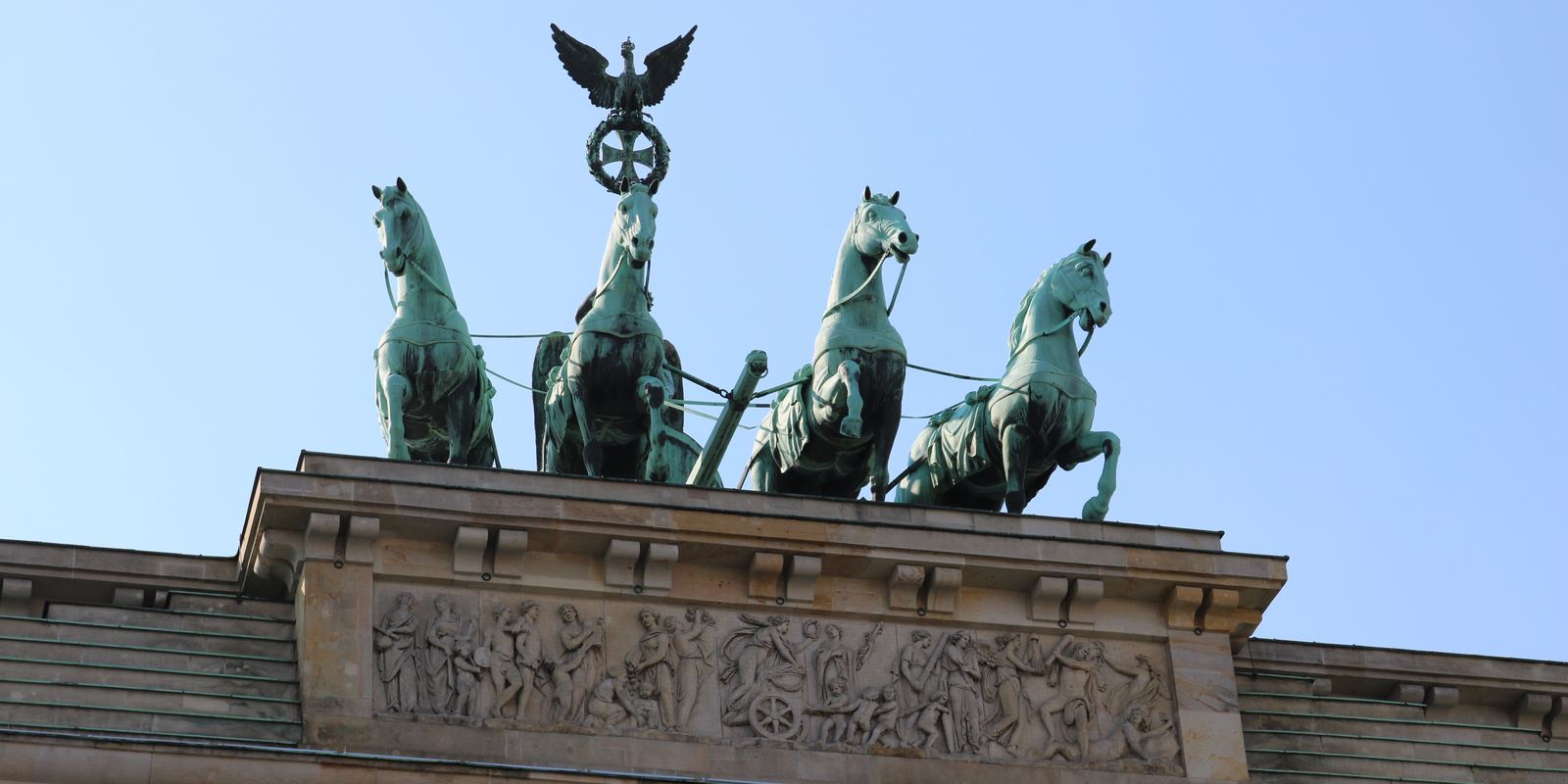
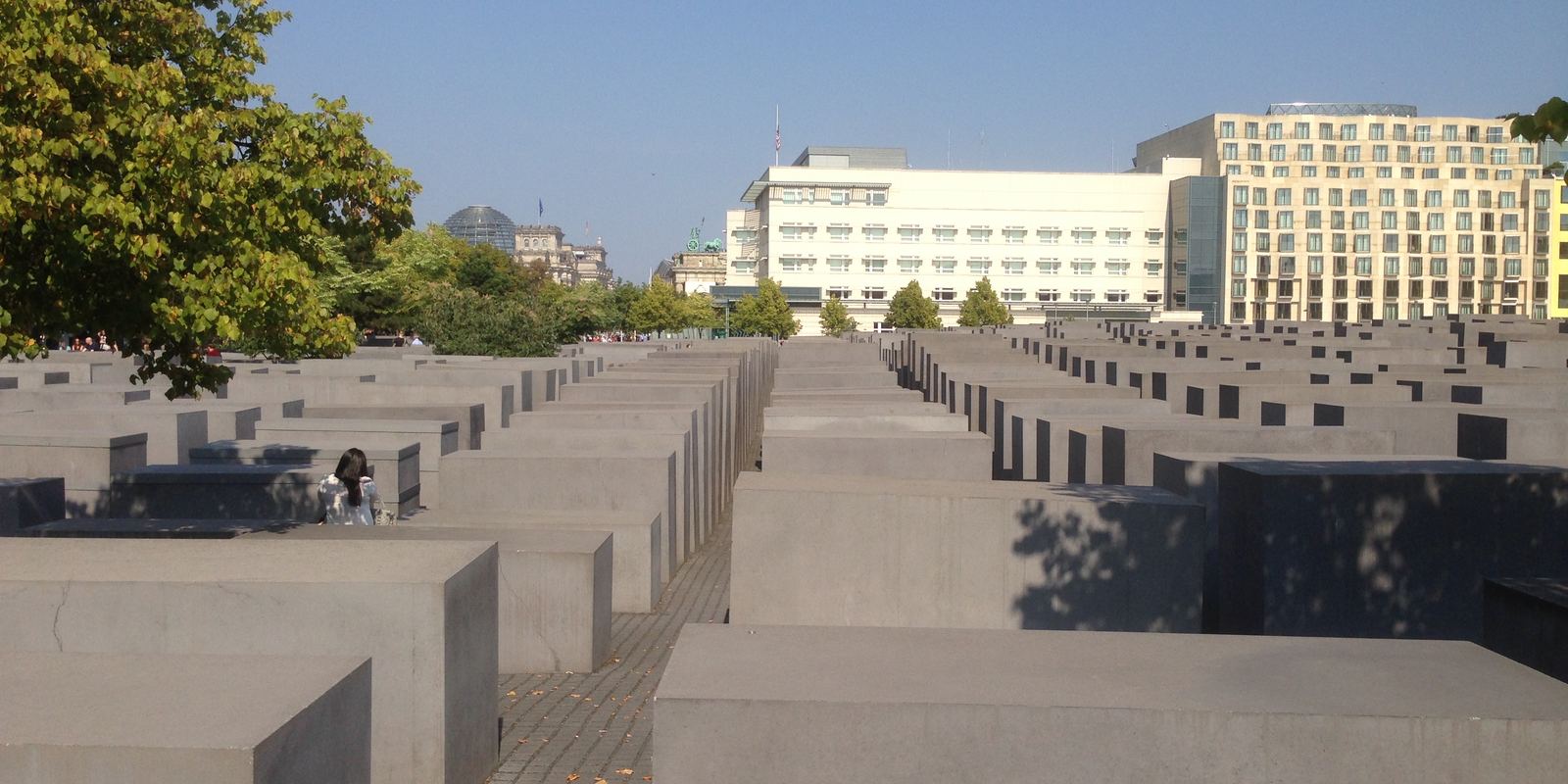
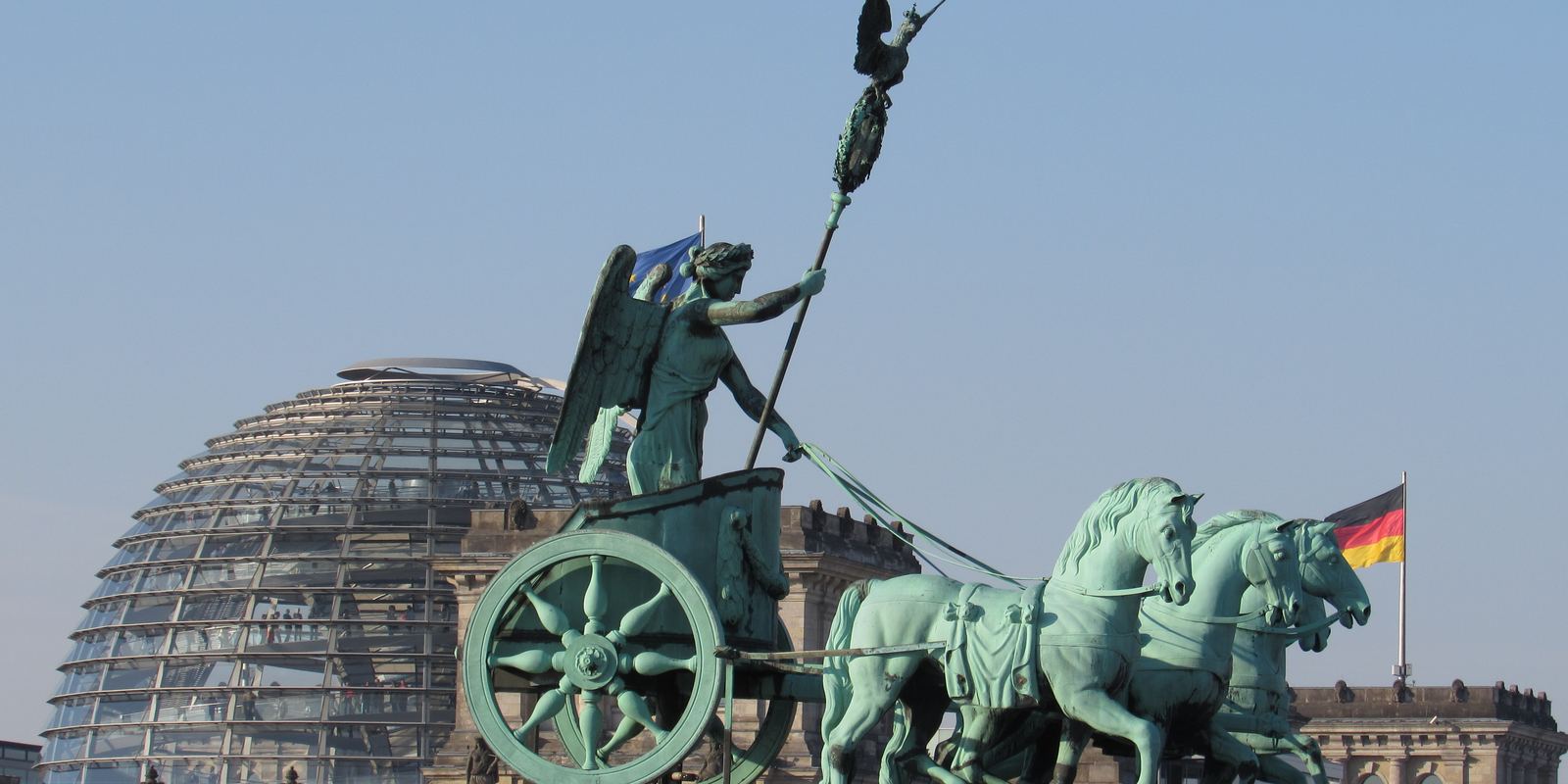
Despite the rain and the Berlin Marathon, Lee Evans, a Board Member of BHA, led another of his revealing tours for newcomers to Berlin. Places of interest Included Pariser Platz, the Brandenburg Gate, the Reichstag, the Memorial to the Murdered Jews of Europe, the site of Hitler’s former bunker, the Luftwaffe HQ, the 17th June Memorial, the Berlin Wall, the former SS Headquarters, Checkpoint Charlie, Friedrichstrasse, Gendarmenmarkt, Bebelplatz, the Old Royal Boulevard, Neue Wache, the TV Tower and Museum Island.
17 September 2019 - Presentation on "Baron von Steuben - Prussia's unlikely but valuable gift to America".
Christopher McLarren, a long-time member of BHA, presented a comprehensive picture of Baron von Steuben's life from his modest start, via his scheming association with royalty, his self-enoblement and his self-promotion, to one of the saviours and folk-heroes of America.
24 August 2019 - Guided tour of Knoblauchhaus Museum.
The Knoblauchhaus is a museum devoted to the Biedermeier era in Berlin. The former residence of the Knoblauch family is one of the few remaining 18th century town houses in Berlin. In its reconstructed living quarters, which are true to the original, exhibits and documents give visitors a glimpse of the life of this well-to-do family. They also offer fascinating information about the architecture, economy, culture and social life of the Biedermeier era. What was life really like in the Biedermeier Period? In German, the word bieder means “conservative” or “conventional”. But was the first half of the 19th century really so bieder? And why did people withdraw into the private sphere? A visit to the Knoblauchhaus Museum provides the chance to step into the world of Biedermeier Berlin. Each of the carefully reconstructed residential spaces is dedicated to a particular member of the silk merchant family Knoblauch, who once lived here. They provide a vivid window into the attitudes and domestic life of the period. Step through the doors of the Knoblauchhaus and experience middle-class life from the period between Napoleon’s wars and the Revolution of 1848!
27 July 2019 - Tour of Oranienburg Palace Museum.
Oranienburg Palace is one of the most significant Baroque buildings in the Mark Brandenburg, and a symbol of the Electorate of Brandenburg’s regal ascent. The palace dates back to a rural mansion built in 1651 for the Great Elector’s wife, Louise Henriette, who was born Princess of Orange-Nassau and from whom the locality of Oranienburg got its name. At the end of the 17th century King Frederick I had the palace expanded and magnificently furnished, in memory of his mother Louise Henriette. By 1700, this palace was considered the most beautiful of all Prussian residences. Under Prince Augustus William of Prussia, one of Frederick the Great’s brothers, the palace and gardens experienced another golden age during the middle of the 18th century. The Oranienburg Palace Museum now houses a collection of masterful works of art, amongst which is the magnificent etagère, or display stand for porcelain, in the Porcelain Chamber. Also outstanding are pieces of seating furniture made of ivory, a series of tapestries (made by the manufactory of Pierre Mercier in Berlin) extolling the heroic deeds of the Great Elector, sculptures by François Dieussart, and works of art by the sculptor Bartholomeus Eggers. The extraordinary collection of paintings includes masterpieces by the great Flemish painter Anthony van Dyck.
29 June 2019 - Walking tour of Siemensstadt.
At the beginning of Berlin‘s industrial revolution in the middle of the 19th century, the Nonnenwiese, a large field separating Charlottenburg and Spandau, was a mostly uninhabited forest. This all changed in the 1890s when the fledgling company of Siemens & Halske purchased the area to consolidate their production that had been spread all over Berlin. Siemens began building factories and workers’ housing, and the Kolonie Nonnendamm formally became Siemensstadt in 1914. Today, Siemenstadt comprises one of the finest collections of brick factory structures, administrative buildings, and workers’ housing in Germany; all of which is listed as a UNESCO world heritage site. Join BHA Board member Lee Evans on a two hour journey and rediscover one of Berlin’s most important neighbourhoods.
19 June 2019 - Annual General Meeting, with guest speaker Sir Peter Torry, former British Ambassador to Germany.
23 May 2019 - Guided tour of the Ruhleben waste-water treatment plant.
This treatment plant, built in 1963 on the site of the former WW1 Prisoner of War Camp (and later a trotting track), is one of six plants that clean the waste-water from Berlin and surrounding parts of Brandenburg. A total of 163 pumping stations are interconnected by a 1,183-kilometer-long pressure pipeline network. So-called main pumping stations convey the waste-water via the pressure line to the sewage treatment plants. In dry weather, the six sewage treatment plants clean around 620,000 cubic metres of waste-water per day. These include waste-water from households, commerce and industry as well as rainwater. Once the waste-water has been purified it then flows into the Spree or the Havel, returning it to its natural cycle.
26 April 2019 - Guided tour of the Helmholtz Centre for Materials and Energy.
The Helmholtz-Zentrum Berlin for Materials und Energy (HZB) conducts research on complex systems of materials that contribute to dealing with challenges such as the energy transition. The HZB research portfolio includes solar cells, solar fuels, thermo-electrics, and materials for new, energy-efficient information technologies (spintronics) or electro-chemical energy storage. During this tour we will learn about the history of the HZB (originally the Hahn-Meitner-Institute) and some of its current research projects.
3 April 2019 - A reading from Sir Winston Churchill's book "The World Crisis 1911-1918".
"One rises from the study of the causes of the Great War with a prevailing sense of the defective control of individuals upon world fortunes.“ Thus wrote Winston Churchill at the start of his book covering the seven years in which the “War to end all wars“ almost destroyed the world. Nick Barnard, a member of BHA, will read some excerpts from Winston Churchill’s book to illustrate how the author viewed the prelude to, and events of, the First World War; and how he believed the war could and should have been averted.
16 March 2019 - "Refuse and Detritus"! A guided tour through the history of Berlin's waste disposal.
Rubbish disposal has a history as long as human existence. As early as 1583, Kurfürst Johann Georg von Brandenburg decreed that the residents of the Spree were responsible for disposing of their own rubbish so that it did not end up in the river. Our guided tour is concerned with the history of how refuse and detritus has been collected and disposed of, and the equipment and vehicles that have been used and developed for these purposes. We are most grateful to the volunteers of the „Saubere Zeiten“ (Clean Times) association who have established a museum and a large collection of vehicles and equipment that bear witness to the history of a subject that most people would rather not know about!
18 January 2019 - Tour of the Red Town Hall (Das Rote Rathaus)
The Red Town Hall is one of Berlin’s most iconic buildings and was built from 1861 to 1869 by Hermann Friedrich Waesemann in the neo-Renaissance style. As the seat of the mayor, the municipal government and the city council, it played a key role in the history of democracy in Berlin. That came to an abrupt end in 1933 when the Nazis rose to power and destroyed democracy and local self-government. The building suffered heavy damage during World War II. However, it was rebuilt in the 1950s and became the seat of the mayor of East Berlin; whilst West Berlin’s Senate met at the Schoneberg Town Hall. It has represented reunified Berlin since 1991.